So you want to lose weight… but you also want your smoothie to taste like something a human would willingly drink. Fair. Because if I have to choke down one more “healthy” smoothie that tastes like blended lawn clippings and sadness, I’m calling the authorities.
Here’s the good news: weight loss smoothies don’t need to feel like punishment. You just need a few rules that keep them filling, balanced, and actually delicious. Then I’ll hand you 5 recipes that feel like real food, not a diet dare.
Why This Recipe is Awesome
This is basically a “stop wasting smoothies” guide.
- You get 7 simple rules that make smoothies filling (aka less snack-attacking later).
- You get 5 recipes that taste like normal, happy smoothies.
- You avoid the classic trap: “It’s healthy!” (but it’s also 800 calories and you’re hungry again in 30 minutes).
- Everything is flexible. No rare ingredients. No weird powders unless you want them.
Key tip: A “weight loss smoothie” isn’t about being tiny. It’s about being satisfying so you don’t immediately hunt down a bag of chips like a raccoon with Wi-Fi.
Ingredients You’ll Need
You don’t need every ingredient for every recipe. Think of this as your smoothie “toolbox.”
Base ingredients (pick a few):
- Frozen fruit (berries, mango, pineapple, cherries)
Frozen = thicker and more milkshake-y without extra junk. - Bananas (fresh or frozen)
Great for texture, but use 1/2 banana if you want lower sugar. - Leafy greens (spinach, kale)
Spinach is the beginner-friendly one. Kale is… aggressive. - Milk of choice (dairy, almond, oat, soy)
Unsweetened is usually best.
Protein options (choose 1):
- Greek yogurt
Creamy, filling, and actually tasty. - Protein powder (whey or plant-based)
Works great if you like it. If you hate the taste, don’t force it. - Cottage cheese
Sounds weird, blends smooth, adds protein like a champ. - Silken tofu
Dairy-free, creamy, surprisingly neutral.
Healthy fats (choose 1 small):
- Peanut butter / almond butter
Delicious, but measure it. Spoon “accidents” happen. - Chia seeds or ground flax
Fiber + thickness. Also helps keep you full. - Avocado
Makes smoothies thick and creamy without extra sugar.
Flavor boosters:
- Cocoa powder
- Vanilla extract
- Cinnamon
- Lemon/lime juice
- Pinch of salt (yes, it helps)
- Honey/maple syrup (optional, but go light)
Step-by-Step Instructions
This post is part rules, part recipes. Here’s how to use it without overthinking it.
- Follow the 7 rules to build better smoothies.
These are the guardrails that keep you full and stop “liquid dessert” situations. - Pick one of the 5 recipes below.
Each one includes protein + fiber-friendly ingredients. - Blend in this order: liquid → greens → protein → fruit → extras.
This gives you the smoothest texture and fewer blender meltdowns. - Taste and adjust.
Too thick? Add milk. Too thin? Add frozen fruit or ice. Too bland? Add vanilla, cinnamon, or a pinch of salt.
Key tip: If your smoothie doesn’t keep you full, it needs more protein and/or fiber, not more fruit.
The 7 Rules for Weight Loss Smoothies (That Don’t Feel Like Diet Food)
- Always include protein.
Protein keeps you satisfied longer. Without it, your smoothie becomes a fancy juice that leaves you hungry. - Use fruit… but don’t make it a fruit party.
Fruit is healthy, yes. But 2–3 cups of fruit can turn into a sugar bomb. Stick to 1–1.5 cups. - Add fiber on purpose.
Chia, flax, oats, berries, spinach… fiber is your best friend here. Fiber slows digestion, which helps with cravings later. - Keep fats small but smart.
Fat helps with fullness and flavor. But “small” means 1 tablespoon nut butter or 1/4 avocado, not “whatever falls off the spoon.” - Watch the liquid calories.
Juice, sweetened milk, sweetened coffee creamers… they add calories fast. Use unsweetened milk and keep it simple. - Make it thick.
Thick smoothies feel like food. Thin smoothies feel like you drank something and it disappeared. Frozen fruit is the easiest fix. - Flavor it like you mean it.
If it tastes boring, you’ll quit. Use cocoa, vanilla, cinnamon, salt, citrus… make it enjoyable.
Key tip: If you’re doing smoothies for weight loss, your goal is fullness + consistency, not perfection.
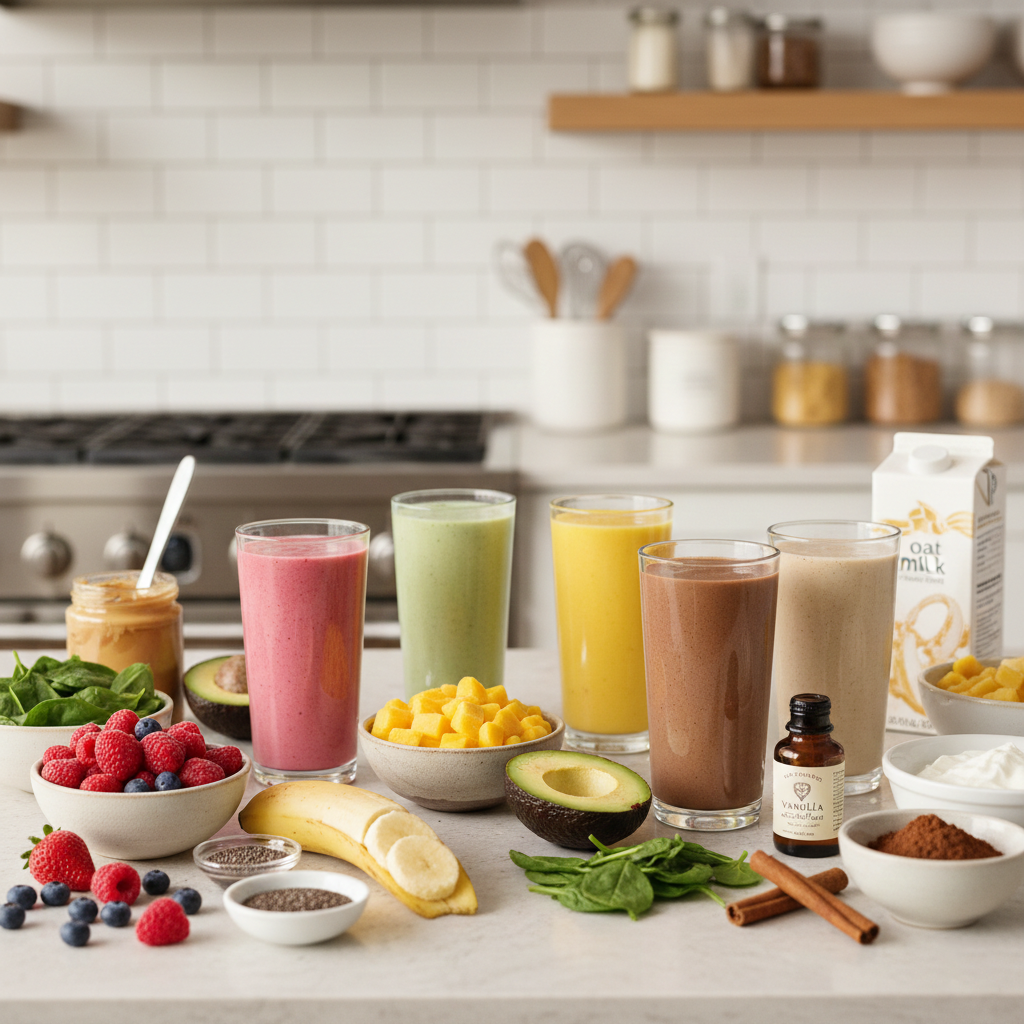
5 Weight Loss Smoothie Recipes That Don’t Feel Like Diet Food
Each recipe makes 1 large smoothie.
1) Berry Cheesecake Smoothie
- 1 cup unsweetened milk
- 3/4 cup Greek yogurt (plain or vanilla)
- 1 cup frozen mixed berries
- 1 tablespoon chia seeds
- 1/2 teaspoon vanilla
- Optional: 1 teaspoon honey
Blend until thick. This one tastes like dessert, but it actually fills you up.
2) Chocolate Peanut Butter “Milkshake” Smoothie (Lighter Version)
- 1 cup unsweetened milk
- 1/2 frozen banana
- 1 scoop chocolate protein powder (or 3/4 cup Greek yogurt)
- 1 tablespoon peanut butter
- 1 tablespoon cocoa powder
- Pinch of salt
Blend. Taste. Try not to get smug about how good it is.
3) Tropical Protein Smoothie (Not a Sugar Bomb)
- 1 cup unsweetened coconut milk (or almond milk)
- 3/4 cup Greek yogurt (or silken tofu)
- 3/4 cup frozen mango
- 1/2 cup frozen pineapple
- 1 tablespoon ground flax
- Squeeze of lime
Bright, refreshing, and still filling.
4) Green Smoothie for People Who Hate Green Smoothies
- 1 cup unsweetened milk
- 1/2 frozen banana
- 1 cup spinach
- 3/4 cup Greek yogurt
- 1 tablespoon peanut butter
- 1/2 teaspoon cinnamon or vanilla
Blend. You’ll taste creamy banana-butter vibes, not salad.
5) Cinnamon Oat “Breakfast” Smoothie
- 1 cup unsweetened milk
- 3/4 cup Greek yogurt
- 1/2 banana
- 1/4 cup oats
- 1/2 teaspoon cinnamon
- Pinch of salt
Blend until smooth. This one feels like breakfast in a cup, because it basically is.
Common Mistakes to Avoid
- “It’s healthy, so I don’t measure anything.”
That’s how nut butter turns into a calorie surprise. Measure the high-calorie stuff at least until you learn your portions. - Using only fruit + milk and calling it a day.
That’s a snack, not a meal. Add protein and fiber or you’ll be hungry again immediately. - Adding juice because it “sounds healthy.”
Juice is basically sugar water with a wellness filter. Use milk or water instead. - Forgetting flavor.
If it tastes bland, you’ll “accidentally” stop making smoothies. Add vanilla, cinnamon, cocoa, citrus, salt—something. - Making it too thin.
Thick smoothies satisfy. Thin smoothies vanish. Frozen fruit is the fix.
Alternatives & Substitutions
- No protein powder?
Use Greek yogurt, cottage cheese, or silken tofu. Cottage cheese blends smooth, FYI. Don’t panic. - No banana?
Use frozen cauliflower (I know) or extra berries for thickness. You won’t taste the cauliflower if you use cocoa or strong fruit. - Dairy-free?
Use soy milk (higher protein), almond milk, or oat milk. Add tofu or plant protein powder. - Want it sweeter without sugar?
Add a date or use vanilla + cinnamon to “trick” your taste buds. - Need more crunch later?
Have the smoothie, then eat something chewy like a boiled egg, yogurt topping, or a handful of nuts. Sometimes your brain wants “food texture.”
My take: If a smoothie doesn’t taste good, you won’t stick with it. Make it enjoyable first, then make it “perfect.”
FAQ
Can smoothies actually help with weight loss, or is this another internet thing?
They can help if they keep you in a calorie deficit and replace a higher-calorie meal. If you add smoothies on top of everything else… well, that’s just extra calories with a blender sound effect.
Do I have to use protein powder?
Nope. Greek yogurt, cottage cheese, tofu—all work. Use what you’ll actually consume without hating your life.
Is fruit “bad” for weight loss?
No. But fruit smoothies can become sugar-heavy fast. Keep fruit to 1–1.5 cups, and balance it with protein and fiber.
Should I use water or milk?
Either. Milk adds creaminess and sometimes protein. Water keeps it lighter. If you use water, add yogurt or protein so it doesn’t taste like sad fruit soup.
Can I drink these every day?
Sure, as long as you’re not using them as an excuse to avoid real meals forever. Mix it up. Your body likes variety, and your taste buds do too.
What’s the best time to have a smoothie?
Whenever it helps you stay consistent. Breakfast works for a lot of people. Post-workout works too. The “best time” is the time you’ll actually do it.
Why am I still hungry after a smoothie?
Because it probably needs more protein, fiber, or thickness. Add Greek yogurt, chia, oats, or make it thicker with frozen fruit.
Final Thoughts
Weight loss smoothies don’t have to taste like diet punishment. If you follow the 7 rules, you’ll build smoothies that feel like real food: creamy, filling, and actually enjoyable.
Pick one recipe, keep it simple, and don’t try to become a smoothie superhero overnight. Consistency beats perfection every time. Now go blend something delicious and feel weirdly proud of yourself for making a “healthy” thing that tastes like a treat. You’ve earned it.